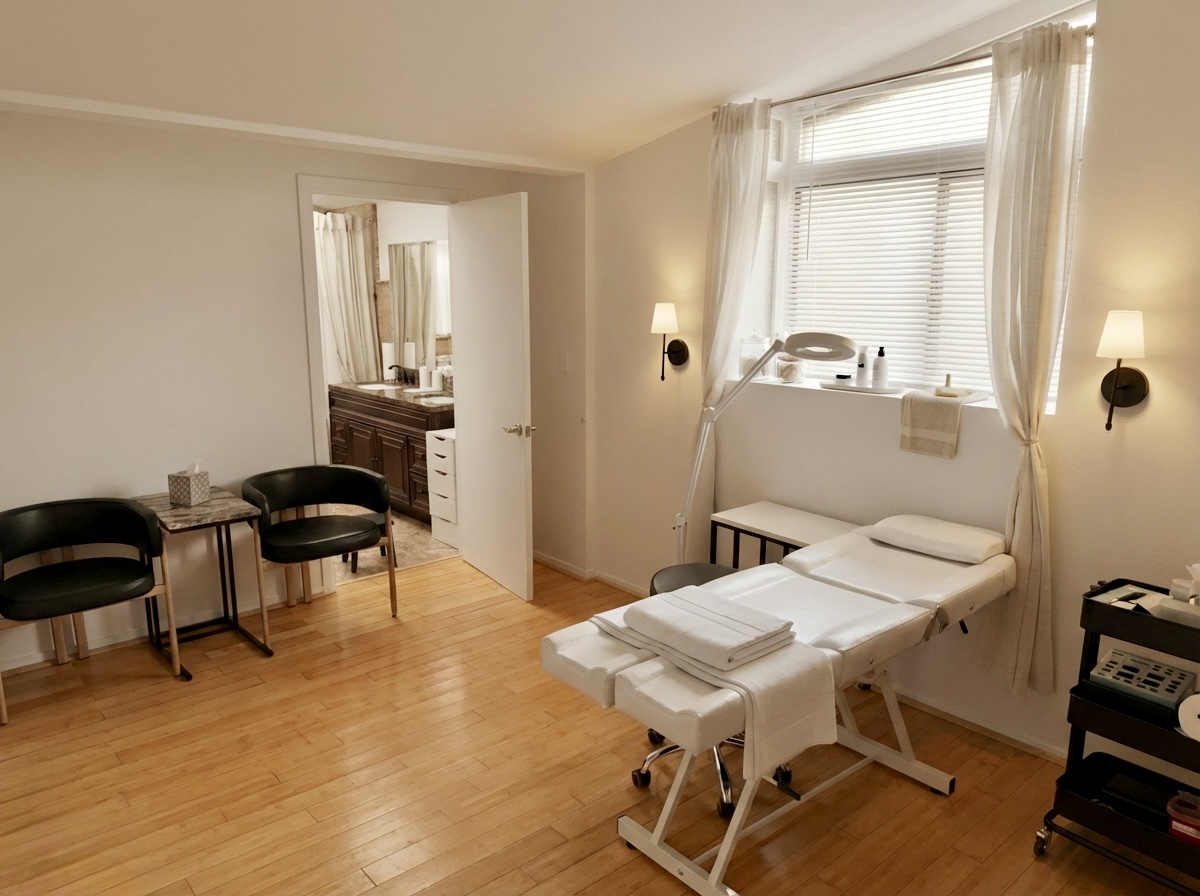
1. What is electrolysis and how does it work?
Electrolysis is the only method the FDA recognises as truly permanent. A hair-thin sterile probe follows the natural path of each follicle. A brief calibrated current destroys it permanently. The hair slides out with tweezers.
It takes more than one session - because hair does not all grow at once. Follicles cycle in and out of activity, and only active ones can be permanently treated. The dormant ones surface later.
So we work with that. Each session catches the next wave.
2. Does it hurt?
Sensations vary - from a small tingle to something briefly sharp, depending on the area, skin sensitivity, and where you are in your cycle. Most clients describe it as manageable, especially once they know what to expect. I work at a calm pace, check in regularly, and we can pause whenever needed. If required, we can discuss topical numbing cream in advance. The best answer to that question is not on this page. It is in the first 15 minutes - which are on me.
3. Why is it charged per minute - not per area?
Because every person is different. Same area, different density, different depth, different hair type - all of it affects the time.
You pay for what actually happens in the room. And as treatment progresses and hair reduces, sessions get shorter.
4. How long does a full course take and why?
Hair does not all grow at once. Every follicle moves through three phases independently - anagen (active growth), catagen (transition), and telogen (rest). At any given moment, only a fraction of follicles are in anagen - the only phase in which electrolysis can permanently destroy them. The rest are dormant. Invisible. Waiting their turn.
This is not a limitation of the method. It is how human hair growth works - and it is the same reason no single session can finish the job, regardless of the technique or the practitioner.
Each appointment catches the next wave of active follicles. Each time, fewer hairs. Each time, a shorter session. The process has a natural endpoint it just follows the biology.
5. How many sessions will I need?
There is no single honest answer upfront. It depends on the area, hair density, hormonal background, and how consistently you attend. After the first 2 to 3 sessions I will be able to give you a much clearer personalised estimate based on what I see.
6. What can I do between sessions?
You can shave - it does not affect results. You can moisturise and trim with scissors. What you should NOT do is wax, sugar, thread, or use an epilator - these remove the hair with its root and there is nothing for me to work with at the next session. Do not use laser or light treatments in parallel.
7. How long is the first session?
Upper lip: 30 to 60 min. Underarms: 40 to 60 min. Forearms: 2 to 4 hours. Bikini pubic: 1.5 to 3 hours. Bikini labia: 3 to 5 hours. Knees: 1 to 2 hours. Lower legs: 3 to 6 hours. Thighs: 3 to 5 hours. Intergluteal: 20 to 90 min. For larger areas it is more comfortable to split across visits. A break every 2 hours is normal.
8. Are there any contraindications?
Absolute contraindications - cannot proceed: epilepsy, haemophilia, serious cardiovascular conditions, pacemaker, active cancer, keloid scarring tendency, hepatitis or syphilis or HIV, isotretinoin use.
Relative contraindications - we discuss individually:
• Active skin issues in the treatment area - herpes, eczema, active acne
• Pregnancy
• Fresh tattoos - minimum 3 to 6 months
• Botox or fillers in the treatment area - minimum 2 weeks
9. How should I prepare?
Hair must be at least 3mm before your appointment - do not remove it beforehand. Not sure if it is long enough? It is the length tweezers can grip. Do a quick test at home - if you can grab it, you are ready.
Exfoliate gently the day before - it makes the procedure easier and the results cleaner. Keep skin moisturised in the days leading up to your session.
Avoid sun and tanning beds for 2 weeks prior.
For bikini appointments - loose, comfortable clothing is appreciated.
10. What if my hair is very light or fine?
Electrolysis works on all hair colours - including light, fine, and barely visible. Unlike laser, it does not rely on pigment. The probe follows the follicle opening, not the colour of the hair.
Very fine hair may take slightly longer to locate - but it can always be treated.
11. Do I need numbing cream?
Many people do not need it, especially on smaller areas. If you are concerned about sensitivity, we can discuss applying a topical anaesthetic at home before your visit. The goal is for you to get through the session without stress.
12. What should I do after the session?
Do not touch the treated area with unwashed hands. Avoid prolonged soaking until healed. No makeup or perfume on face or neck for 3 to 5 days. Avoid saunas, pools, and intense workouts for 7 days. Stay out of the sun for at least 2 weeks. Small scabs may appear - do not pick them. They resolve on their own.
13. Will it leave marks or scars?
With correct technique and proper aftercare - no. Minor redness, temporary small scabs, or brief pigmentation are normal reactions that resolve on their own. The risk of scarring is higher if you pick at scabs, ignore aftercare, or have a tendency toward keloids.
14. Is everything properly disinfected?
Yes. The probe comes in a sealed sterile package - and is opened in front of you at the start of every session. All consumables are disposable and replaced before each appointment. Reusable instruments are treated with certified disinfectant solution. Every surface is disinfected before you arrive and after you leave.
15. What should I expect after the very first session?
Some hairs will be gone immediately. There may be mild redness or slight swelling - a completely normal skin response that resolves within 24 to 48 hours. During the first session I assess your hair type and skin, calibrate the settings, and explain everything you will see during recovery. You will leave knowing exactly what happened and what to expect next.